
The heart of the AI OS
Turn any SaaS API into an agent.
Orchestrate them as one team.
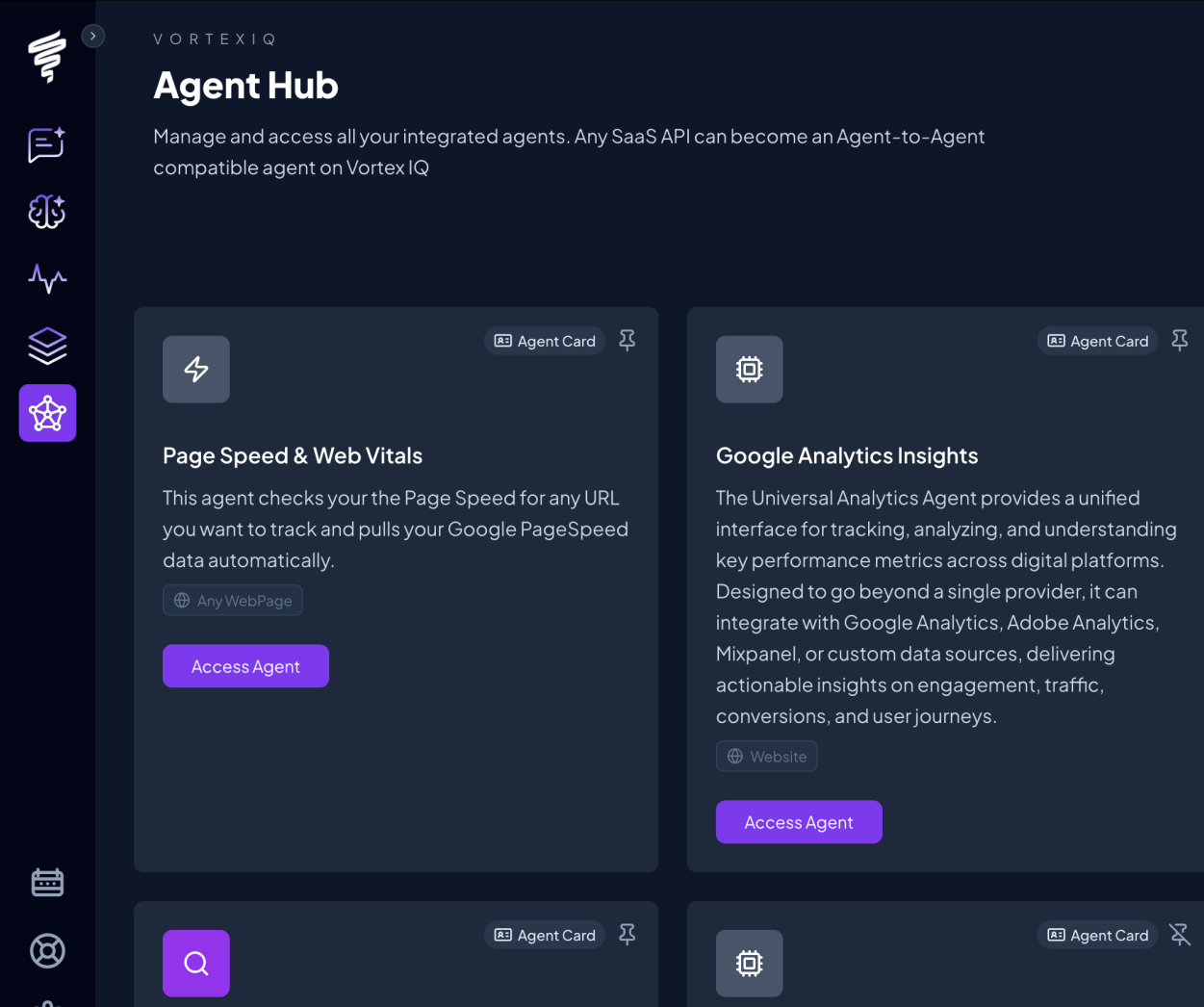
Agent Hub is where your connectors, agents, and automations live. Build agents from any public or private API, publish them into a library, and let them collaborate through Agent‑to‑Agent communication — with policy controls, approvals, and an audit trail baked in.

Enterprise governance

Safe execution + rollback-ready

A2A orchestration

Marketplace-ready library
Staging, Backup, and Rollback Engineered for Safe Commerce

Ask Viq is your conversational command centre for e-commerce. You talk in plain English. Viq talks back with answers, context, and safe actions that actually change your store.
THE SHIFT

Any SaaS app with an API can become part of your Agent Hub.

Here’s the simple truth: if a tool exposes an API, it can be wrapped into a connector and promoted into an agent with skills. That means your stack stops being a pile of disconnected apps, and becomes a coordinated workforce that can plan, execute, and report.
CONNECT
Bring your tools
Shopify, BigCommerce, Adobe Commerce, GA, payments, fulfilment, ESPs, CRM, ERP — public or private.
  • API key, OAuth, or custom auth flows
  • OpenAPI import or doc-driven discovery
  • Rate limits, retries, and safety defaults
BUILD
Convert APIs into skills
Define what the agent can do in plain language. Each skill maps to one or more API calls.
  • CRUD operations, search, and workflows
  • Input/output contracts for reliability
  • Human-in-the-loop checkpoints
ORCHESTRATE
Agents that collaborate
Agent‑to‑Agent communication lets specialised agents call each other to complete multi-step outcomes.
  • Tool‑calling with consistent contracts
  • Task routing to the best specialist
  • Shared context and traceable decisions
How it works
From "API docs" to "working agent" in a repeatable flow
The goal is not a demo agent. The goal is an agent you can trust in production. That means connectors, policies, sandbox testing, approvals, and an audit trail — by default.
check icon
Connect the SaaS tool
Create a connector by importing an OpenAPI file or pasting documentation. Vortex IQ generates the schema, auth UI, and endpoint catalogue (including rate limits and required fields).
Define skills (what the agent can do)
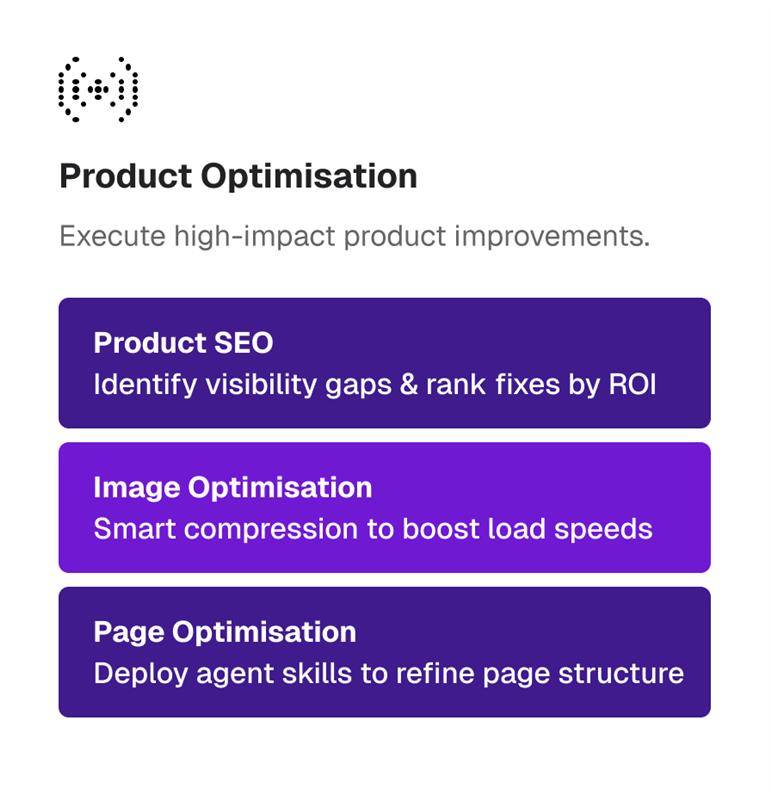
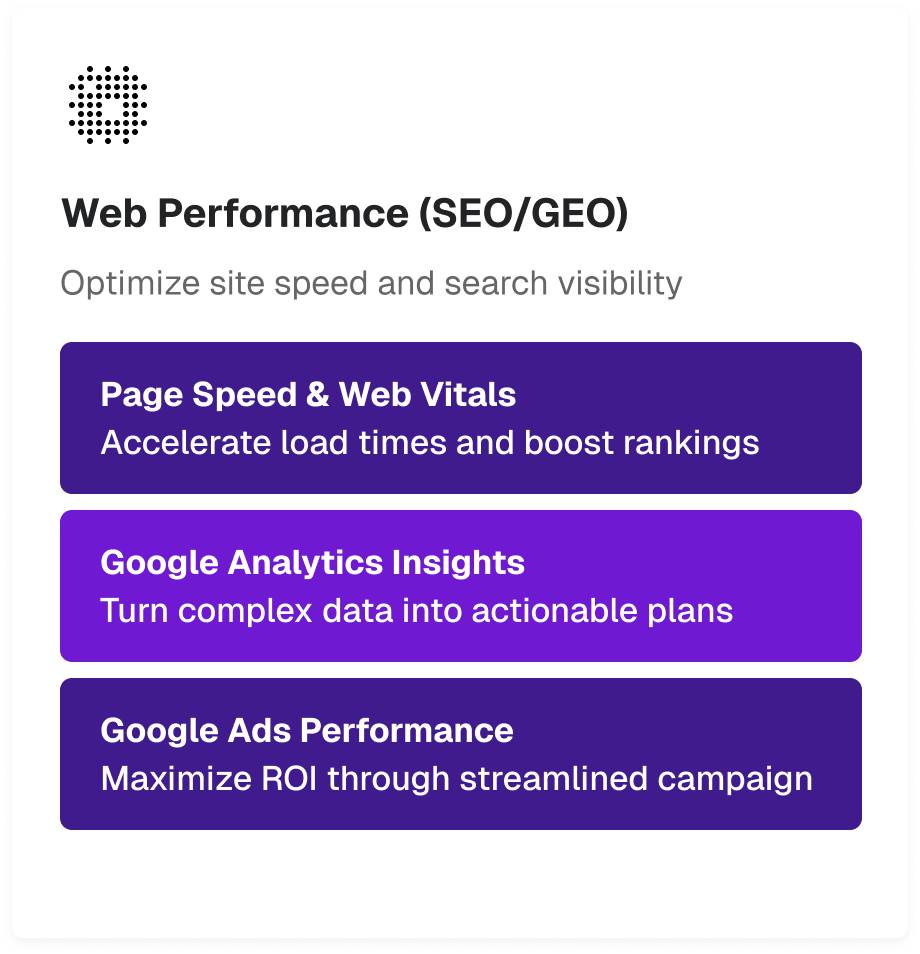
Skills are the contract: inputs, outputs, and behaviour rules. One skill might wrap a single API call, or orchestrate multiple calls into a workflow (e.g., “Create discount”, “Publish campaign”, “Validate results”).
Add policies and guardrails
Put boundaries around what the agent is allowed to change. Add approval gates for high‑risk actions, enforce environment rules (staging first), and require backups before write operations.
Test in a safe mode
Run simulated tasks, validate responses, and check behaviour under real data constraints. Capture and re‑use test cases as regression. If it can’t be tested, it can’t be trusted.
Publish into the Agent Library
Give it a name, description, tags, and usage examples. Decide who can access it (merchant, agency, internal, or public). Now it’s a reusable building block — not a one‑off prompt.
Orchestrate with Agent‑to‑Agent communication
Connect agents into an end‑to‑end flow. Example: Monitoring agent detects a drop → sends context to an analysis agent → calls a remediation agent → triggers a backup agent → requests approval → applies fixes → verifies metrics.

Build agents like products, not prompts

CONNECTOR STUDIO
Connector discovery & schema
Turn API documentation into structured capability maps that agents can call safely.
  • Auth UI generation (OAuth, keys, custom)
  • Endpoint catalogue and field constraints
  • Retries, rate limits, and pagination rules
SKILL DESIGN
Skills you can trust
Define inputs, outputs, and behaviour rules so you get consistent results — not vibes.
  • Strong input/output contracts
  • Deterministic tool selection
  • Reusable skills across agents
RELEASE
Publish, version, deprecate
Agents need lifecycle controls: versioning, change logs, and safe rollouts.
  • Versioned releases and rollback
  • Changelogs and ownership
  • Access control (RBAC)
Multi-agent workflows that behave like a real team
Policies by default Define what actions are allowed, what requires approval, and what must run in staging first.
Audit trail Every run is logged: inputs, outputs, tools called, changes proposed, approvals, and outcomes.
Safe execution Retries, rate limits, and fail-safe behaviour reduce breakage and keep you out of incident mode.
Reversible changes Backups, versioning, and rollback-friendly workflows mean you can undo quickly when needed.
APPROVAL GATES
Human-in-the-loop where it matters
Use assisted-action modes for high impact tasks: pricing, payments, checkout, brand messaging, scripts, and theme changes. Agents propose, humans approve, agents execute — then verify.
  • Approve-by-role: merchant, agency, developer
  • Threshold rules (e.g., discounts, margin changes)
  • Staging preview links before deploy
ENVIORNMENT SKILLS
Staging first. Always  trust.
Production changes are expensive when they go wrong. Agent Hub is designed to route risky actions through staging and backups by default, so you can ship with confidence.
  • Staging run → diff → approval → deploy
  • Automated pre-change snapshotting
  • Verification agent confirms outcomes
WHAT YOU CAN DO

High-impact workflows that feel like magic (but are actually engineered)

Below are examples of real workflows Agent Hub enables when agents can collaborate via A2A. The common pattern: detect → diagnose → propose → approve → execute → verify.
REVENUE
Stop checkout leakage
Identify payment failures, script errors, and UX friction, then apply safe fixes via staging and verification.
  • Nerve Centre detects anomalies
  • Diagnostics agent finds root cause
  • Fix agent prepares patch plan
  • Backup → approval → deploy → verify
GROWTH
Launch campaigns faster
Create coupons in your store, then trigger your ESP to send segmented campaigns with tracking and reporting.
  • Commerce agent creates offer
  • Marketing agent builds segments
  • Creative agent drafts copy variants
  • Send + monitor performance
OPS
Automate catalogue hygiene
Fix product titles, images, meta fields, SEO metadata, and categorisation with rules and approvals.
  • Find errors and missing fields
  • Generate updates in batches
  • Staging review with diffs
  • Publish with audit trail

Agent Hub is where your AI OS becomes real.

Connect any SaaS API. Build agents with contracts and guardrails. Orchestrate them with Agent‑to‑Agent collaboration. Then ship outcomes — not dashboards.